AI UGC Ads Pricing in 2026: Complete Cost Breakdown
Quick Answer
Traditional UGC costs $100-500 per video with 2-4 week turnaround. AI UGC tools like Arcads ($97-497/mo), Creatify ($39-299/mo), and MakeUGC ($49-199/mo) bring per-video costs down to $50-150. Hybrid agencies like APXlab charge $1,500-2,000/mo but include strategy, compliance review, and multi-format creative for supplement brands.
Every supplement brand running Meta ads in 2026 faces the same math problem. You need more creative than ever to beat creative fatigue, but traditional UGC costs have not gotten any cheaper. If anything, creator rates have gone up while the shelf life of each ad has gone down.
AI has completely rewritten the pricing equation. But “AI UGC” is not one thing with one price. The range spans from $39 per month for basic tools to $2,000 per month for specialized agencies. The right investment depends on your ad spend, your internal capabilities, and how much of the creative process you can handle yourself.
This is the most complete cost breakdown available for supplement brands evaluating their options in 2026. Every number comes from real pricing data, not estimates.
Traditional UGC: What Human Creators Actually Cost
Let us start with the baseline that most supplement brands are familiar with. Traditional UGC means hiring real people to film themselves using your product and sharing their experience on camera.
Creator Fees by Tier
Micro-creators (under 10K followers): $100 to $200 per video. These creators are accessible and affordable, but quality varies wildly. Many are new to creating branded content and need detailed briefs and multiple revision rounds. For supplement brands, the risk is that inexperienced creators ad-lib claims that violate compliance rules.
Mid-tier creators (10K to 100K followers): $200 to $500 per video. This is the sweet spot for most UGC campaigns. These creators understand branded content, have decent production quality, and can follow a script while still sounding natural. Expect 1 to 2 revision rounds.
Established creators (100K+ followers): $500 to $2,000 per video. Premium pricing for creators with proven audiences and high production value. Often includes usage rights and whitelisting potential. For supplements, creators in the health and wellness space command the highest rates.
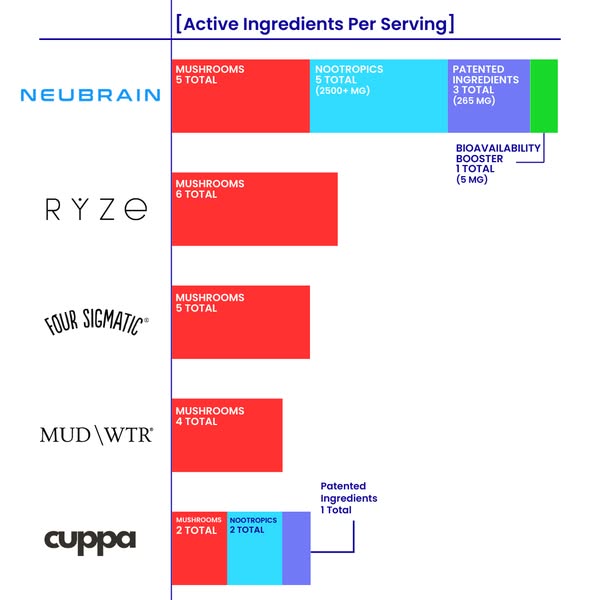 Traditional vs AI vs Hybrid: the cost gap is 70-95%
Hidden Costs That Add Up
The per-video fee is never the full picture. Here are the costs that most brands forget to budget for.
Product shipping: $10 to $50 per creator depending on product size and location. For supplement brands, this also includes ensuring the product arrives before the creator’s availability window closes.
Usage rights: Many creators charge separately for the right to use their content in paid ads. Expect an additional $50 to $200 per video for 60-day usage rights. Extended or perpetual rights cost more.
Revisions: Most creators include one revision round in their fee. Additional rounds typically cost $50 to $100 each. For supplement brands, compliance-driven revisions are common and often require 2 to 3 rounds.
Platform fees: If you are using a marketplace like Insense or Billo, expect platform fees of $200 to $400 per month on top of creator fees.
Management time: Someone on your team needs to write briefs, review submissions, manage creator communication, and handle revisions. At 2 to 4 hours per video, the internal cost of managing traditional UGC often exceeds the creator fee itself.
Total Cost Per Finished Video
When you add everything together, a single finished UGC video for a supplement brand typically costs $250 to $700 all-in. At 20 videos per month (the minimum for serious Meta testing), that is $5,000 to $14,000 monthly in creative production.
And the turnaround? Two to four weeks from initial brief to final approved asset. In a world where Meta rewards fresh creative with better distribution, that timeline is a significant competitive disadvantage.
AI UGC Tools: The New Pricing Landscape
AI UGC tools have created an entirely different cost structure. Instead of paying per video, you pay a monthly subscription and generate as many assets as your plan allows.
Arcads: $97 to $497 Per Month
Arcads is the most established AI UGC platform. Their avatar technology produces realistic talking-head videos from scripts you provide.
Starter plan ($97/mo): Roughly 10 video credits per month. Good for initial testing but not enough volume for serious optimization.
Growth plan ($249/mo): Approximately 50 video credits. This is where the economics start to make sense. At 50 videos, your per-video cost drops to about $5 each.
Scale plan ($497/mo): 200 or more credits for high-volume production. Per-video cost approaches $2.50.
What is not included: Script writing, creative strategy, compliance review, and performance optimization. You bring the scripts, Arcads renders the videos.
Creatify: $39 to $299 Per Month
Creatify differentiates with their URL-to-video feature and published performance data showing 28% lower CPR and 31% lower CPC compared to traditional creative.
Starter ($39/mo): Limited credits, basic features. Good for experimenting with the platform.
Business ($149/mo): Mid-tier with enough credits for consistent testing. The URL-to-ad feature works best at this tier.
Enterprise ($299/mo): Full feature access with high volume credits and batch processing.
Creatify’s advantage is speed. Paste a product URL and get a video in minutes. The limitation for supplement brands is that product pages rarely contain the emotional, story-driven copy that makes winning supplement ads.
MakeUGC: $49 to $199 Per Month
MakeUGC targets the budget end of the market with simpler tools and lower prices.
Basic ($49/mo): Entry-level access with limited avatar selection and credits.
Pro ($99/mo): More avatars, more credits, basic editing tools.
Business ($199/mo): Full access with highest volume.
The trade-off is visible. Avatar quality and variety sit a tier below Arcads and Creatify. For testing hooks cheaply, it works. For scaling winners to high-spend campaigns, the production quality gap becomes noticeable.
AdCreative.ai: $29 to $299 Per Month
AdCreative.ai focuses on static ad creative with AI-generated designs, headlines, and copy variations.
The supplement angle: This tool excels at producing the kind of text-plus-image static ads that our data shows performing at 91 out of 100 in the supplement space. If your creative strategy includes static formats (and it should), AdCreative.ai is worth testing alongside a video tool.
Per-Asset Cost Comparison
At typical monthly volumes for supplement brands (20 to 40 creatives per month), here is what each option costs per finished asset.
Traditional UGC: $250 to $700 per video (all-in)
Arcads (Growth): $5 to $10 per video
Creatify (Business): $4 to $8 per video
MakeUGC (Pro): $3 to $6 per video
The cost reduction is 70 to 95% per asset. That is not a marginal improvement. It is a fundamental restructuring of creative economics.
Hybrid Agency Model: Strategy Plus AI Production
The third category sits between self-serve tools and traditional agencies. Hybrid agencies use AI for production but add human expertise for strategy, scripting, and optimization.
APXlab: $1,500 Trial, $2,000 Per Month
APXlab is the only hybrid agency built specifically for supplement brands. The pricing includes strategy, scripting, production, compliance review, and performance-based iteration.
Trial engagement ($1,500 one-time): 10 finished ads across 2 creative concepts. This is designed as a proof-of-concept that demonstrates the quality and approach before a monthly commitment.
Growth plan ($2,000/mo): 20 ads across 5 creative concepts, delivered monthly. Includes competitive analysis using GetHooked ad intelligence, compliant script writing, multi-format production (video plus static plus carousel), and iterative optimization based on your ad account performance data.
What the premium buys: You are not paying for video rendering. You are paying for supplement expertise that ensures every hook, claim, and CTA is optimized for the supplement buyer and compliant with FDA and FTC guidelines. You are paying for ad intelligence data that shows what is actually winning in the category right now. And you are paying for creative variety across formats, not just talking-head videos.
When the Premium Pays for Itself
The break-even math is straightforward. If your monthly ad spend is $20,000 and APXlab improves your ROAS by just 10%, that generates $2,000 in additional return, covering the entire monthly cost. In practice, the improvement from moving to data-driven, compliance-aware creative is typically much larger than 10%.
For brands spending $50,000 or more per month on Meta, the creative investment becomes nearly invisible compared to the performance gains. The cost of running generic, non-optimized creative at scale far exceeds any agency fee.
The Hidden Cost Most Brands Ignore: Compliance Risk
Supplement brands face a cost that other DTC categories rarely think about: compliance violations.
A single flagged health claim can result in ad account restrictions that affect every campaign you are running. The direct cost is lost revenue during the restriction period. The indirect cost is the algorithmic penalty that makes your ads more expensive to deliver for weeks or months afterward.
Traditional UGC carries the highest compliance risk because creators frequently ad-lib. An AI tool carries moderate risk because the script is controlled but nobody reviews it for supplement-specific claims. A specialized agency carries the lowest risk because compliance review is built into the workflow.
When you calculate the true cost of each option, factor in the probability and cost of a compliance incident. For supplement brands, this risk adjustment often tilts the math toward more expensive options that include compliance safeguards.
What About Free Options?
Some brands try to produce UGC internally using employees, friends, or the founder on camera. This can work at very early stages, but it has significant limitations.
Founder-led content has a ceiling. It works for brand story and authenticity, but you cannot scale it to 40 creatives per month. The founder has other things to do.
Employee UGC raises legal questions about disclosure and can feel inauthentic to audiences who expect genuine customer experiences.
The real cost of “free” internal UGC is time. If your founder spends 10 hours per month filming and editing UGC instead of growing the business, the opportunity cost far exceeds any tool subscription or agency fee.
Our Recommendation: Match Spend to Creative Investment
Spending under $5K per month on ads: Use MakeUGC or Creatify. Keep creative costs under $200 per month. Focus on finding winning hooks and product-market fit before investing in premium creative.
Spending $5K to $20K per month: Graduate to Arcads plus a freelance supplement copywriter. Budget $500 to $1,500 per month for creative. Start testing static image ads alongside video.
Spending over $20K per month: APXlab or a similar specialized agency. At this spend level, creative quality is the biggest lever for improving profitability. Budget $2,000 to $4,000 per month for creative and expect the investment to pay for itself through improved performance.
The universal rule: Never spend more than 10 to 15% of your monthly ad budget on creative production. If you are spending $10K on ads, keep creative costs under $1,500. If you are spending $100K, budget up to $15K for world-class creative that maximizes every dollar of ad spend.
Ready for supplement-specialized AI creative that pays for itself? See how APXlab works.